How to Store Firewood Outside for Winter: A Dry, Pest-Smart Setup
Choose a lawful, well-drained site; raise and loosely stack the wood; cover the top while leaving airflow; and test a fresh split before the first burn.
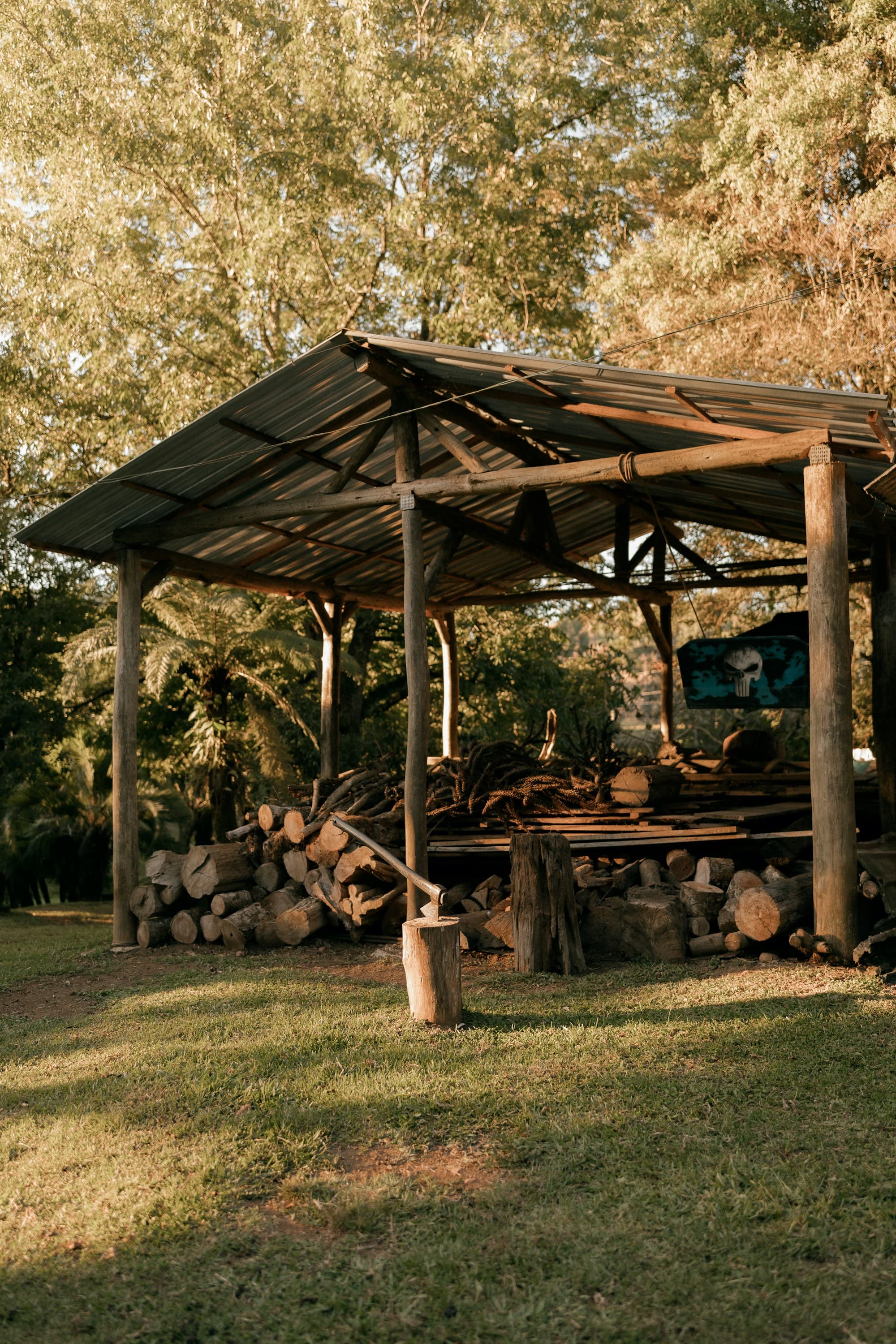
Outdoor firewood storage is a raised, ventilated stack that protects split wood from ground moisture and direct precipitation while letting water vapor escape. It is not a sealed tarp bundle, an indoor winter stockpile, or proof that the fireplace, stove, chimney, and venting are safe to use.
A good setup needs drainage and moving air. The stack must remain upright after wind, snow, freeze-thaw cycles, and repeated removal. Insects stay outdoors. The location must also comply with city, HOA, quarantine, and wildfire-zone rules.
No national setback fits every woodpile. Before choosing a spot, check local fire and building authorities, wildfire guidance, HOA documents, insurer requirements, and firewood-movement restrictions. Numbers for appliances or ash containers are not woodpile-siting rules.
The short answer
Store the bulk supply outdoors on a sound base in a site allowed by local fire, building, pest-quarantine, and HOA rules. Raise the first course above soil and grass, build a narrow stable stack with room for air, and cover the top without wrapping the sides. Buy local or certified heat-treated wood. Before burning, split several representative pieces and test the newly exposed faces; EPA guidance says wood burns best below 20% moisture. Bring indoors only a small amount you expect to use promptly.
Cost and effort
Plan the practical side
| System | Best for | Airflow and rain | Stability work | Cost inputs | Likely failure |
|---|---|---|---|---|---|
| Rated rack + rigid top | Defined stack | Open sides; fitted cap | Level base; obey load rating | Rack, cap, base, parts | Overload or settlement |
| Sleepers + top cover | Simple legal setup | Air below; pitched cover | Sound supports; braced ends | Base, cover, ties, disposal | Rot or pooled water |
| Open-sided shed | Recurring larger supply | Roof plus cross-flow | Foundation, permits, snow/wind design | Design, structure, roof, labor | Leaks or weak structure |
| Temporary top tarp | Short-term protection | Crown covered; sides open | Secure and check after wind | Tarp, ties, raised base | Wrapping, tears, or leaning |
| Cost line | Record | Comparison question |
|---|---|---|
| Wood | Defined unit, species, length, seasoning claim, origin | Can quantity and source be checked? |
| Delivery/stacking | Fees, minimum, access charge, placement | Driveway drop or approved site? |
| Base/rack | Capacity, dimensions, material, site work | Will it carry this order? |
| Cover/roof | Size, drainage, ties, replacement | Do the sides stay open? |
| Verification | Meter, batteries, operating check | Will several fresh splits be tested? |
| Handling | Cart, gloves, lighting, snow access | Can the route stay safe? |
| Compliance | Permit, HOA, wildfire, treatment records | Which written local rule controls? |
| Check | Pass | Pause |
|---|---|---|
| Rules | Address and source checked | Any storage or movement rule is unknown |
| Drainage | Firm base; water leaves safely | Ponding, erosion, or ice likely |
| Air | Sides and ends remain open | Plan wraps the pile |
| Stability | Level base and rated rack/stable ends | Wind, settlement, removal, children, or pets could tip it |
| Access | Manageable winter route | Icy slope, climbing, or unsafe carry |
Choose the legal site before choosing the rack
Walk the candidate area after rain if possible. Look for standing water, roof discharge, soft soil, drifting snow, vegetation, utilities, ignition sources, and the route you will use while carrying wood. Then check the rules for the exact address. Municipal fire and building provisions, wildfire defensible-space programs, HOAs, lease terms, and insurers can impose different placement or quantity limits.
- Do not borrow a distance
- USFA tells households to keep combustibles at least 3 feet from fireplaces, wood stoves, radiators, and space heaters. It separately says cooled ashes belong in a covered metal container outside at least 10 feet from the home and nearby buildings. Those are heat-source and ash rules, not a universal outdoor woodpile setback.
- Wildfire and access boundary
- Use the current local defensible-space standard in wildfire country. Choose a lawful winter route that does not block an exit, cross an icy slope, or put a climbable stack where children play.
Build a base that keeps the first course out of wet soil
Firewood sitting on soil or grass can wick moisture, restrict airflow, and settle unevenly. Start with a level, durable base or a rack rated for the intended load. Every support should bear evenly. A pallet can be useful only when its history, material, condition, and load capacity are suitable; discard one with rot, broken boards, protruding fasteners, contamination, or unknown treatment.
- Load gradually
- Place sound, similar-length pieces deliberately and stop if the base rocks, bows, sinks, or twists. Do not exceed a rack rating. Keep hands and feet out of pinch points, and get help with material that exceeds your comfortable lifting limit.
Stack for air movement and predictable removal
Arrange split wood with the cut ends exposed and enough looseness for air to travel through the row. The goal is an orderly stack, not maximum density. Alternate irregular pieces so they bear securely, and keep the face close to vertical. Never pull a supporting piece from the bottom of a tall stack just because it looks driest.
- Recheck after movement
- Wind, a thaw, saturated ground, and repeated removal can change the pile. Sight along the face and ends after those events. Unstack a leaning section from a safe position before it becomes a collapse.
Cover the top, not the entire pile
Use a rigid cap, shed roof, or secured tarp over the top to shed rain and snow. Pitch flexible material so water cannot pool, and keep it from becoming a sail. Leave the long sides and end grain open enough for cross-flow. EPA's archived Burn Wise guidance specifically recommends storing wood outdoors, off the ground, with only the top covered because covered sides trap moisture.
- Inspect the weather layer
- After wind or snow, check for pooled water, tears, loose cords, and a changed stack angle. Improve roof projection rather than wrapping the sides. Do not climb onto the pile.
Prove the wood is dry on fresh split faces
Color, cracks, sound, weight, and a seller's word can be clues, but they do not replace a moisture check. EPA says wood burns best below 20% moisture. Select several representative pieces from different locations, split each one, and press the meter pins into the newly exposed interior face according to the meter instructions. Record the readings rather than keeping only the lowest one.
- Sample the load
- Test upper, lower, sheltered, and weather-facing sections, including each species or size group. One dry piece does not certify an order. Keep high-reading wood outside to dry; never burn rotten, moldy, painted, treated, glued, or trash wood.
Keep insects outside and the supply local
Firewood can carry insects that emerge after the wood warms indoors. University of Minnesota Extension recommends leaving firewood outside or in an unheated shed or garage, bringing in a small supply as needed, and burning it before insects emerge. Do not spray a firewood pile with pesticide as a shortcut; the Extension guidance says pesticide treatment is not needed for these nuisance wood borers.
- Buy near the burn site
- USDA APHIS advises local or certified heat-treated wood. Check current federal and state rules before crossing a county or state line. Isolate a questionable load outdoors and call the agriculture authority rather than moving it again.
Price the usable fuel, not the cheapest headline
Ask every seller to define the quantity in writing and state species or mix, piece length, source area, seasoning claim, delivery limits, and stacking charge. Firewood sales units and measurement rules vary by jurisdiction. A photograph of a pile does not establish volume, moisture, or legality. Compare quotes only after the units and services match.
- Use two totals
- Keep first-year equipment and handling separate from recurring fuel. Divide wood, delivery, and stacking by accepted dry quantity. Put the purchase, delivery pattern, and storage-replacement reserve in the Monthly Home Cost Planner.
Treat savings as a measured household result
Dry fuel can burn more cleanly and effectively than wet fuel in an appropriate appliance, and disciplined buying can reduce rejected or unusable wood. That does not establish a universal dollar saving. Heating demand, appliance efficiency, chimney condition, wood species, moisture, local prices, supplemental-system use, and household operation all change the result.
- Keep a season log
- Record accepted quantity, moisture samples, purchase and delivery cost, appliance service, and how long the supply lasts. Compare similar weather and occupancy; do not promise a fixed payback.
Hand dry wood off to a safe heating system
Stored fuel is only one part of wood-heat safety. Before the first burn, confirm working smoke and carbon-monoxide alarms and arrange the chimney, vent, and appliance inspection or cleaning required by the manufacturer and a qualified professional. USFA recommends annual qualified chimney and vent cleaning and inspection. Keep anything that can burn at least 3 feet from the operating heat source.
- Ashes are separate
- USFA says cooled ashes belong in a covered metal container outdoors at least 10 feet from the home and nearby buildings. Never put warm ash in the woodpile, compost, plastic, cardboard, or trash.
Know when to hire or call the authority
Hire a locally licensed or otherwise qualified professional when a permanent rack or shed needs design, foundation, structural, electrical, permit, or wildfire-compliance work; when the proposed location is disputed; or when the load cannot be moved and stacked safely. Use the trade and license class required where the property is located, and verify it with the issuing authority.
- Seller or delivery problem
- Pause unloading when the unit, species, origin, treatment documentation, placement, or seasoning claim does not match the written order. Photograph the condition and resolve acceptance before the pile is mixed with existing wood.
- Pest or plant-health question
- Call the state agriculture department, USDA APHIS, or local extension office for quarantine, invasive-pest, or suspicious-infestation questions. A general contractor is not the source for plant-pest movement rules.
- Fire and heating scope
- Ask the local fire authority about storage boundaries and a qualified chimney or hearth professional about the appliance and venting. For smoke, fire, or a carbon-monoxide alarm, get everyone outside and call emergency services.
Put the guide to work
Field notes
- Site check
- Record drainage after rain, winter sun, prevailing rain or snow, access after a storm, the ground surface, nearby structures and vegetation, and the local rule or official you checked. Reject a site before buying a rack if water ponds there or the required boundary is unclear.
- Stack check
- Use a sound level base, stable ends or a rated rack, narrow rows, exposed cut ends, and a top cover that sheds water. Keep children and pets away while building or taking wood from the pile.
- Dryness check
- Choose pieces from more than one part of the stack, split them, test each fresh interior face, and record the date, species or mix, and readings. Do not judge a delivered load from one dry-looking end.
- Pest check
- Confirm where the wood was cut and whether local or certified heat-treated material is required. Keep the main pile outdoors and move only a small near-term supply inside.
- Stop points
- Stop for a leaning or collapsing stack, rotten supports, widespread mold or decay, active infestation, disputed quantity, unknown movement rules, unsafe access, or a location that cannot meet local fire or wildfire requirements.
Common questions
Frequently asked questions
- Should firewood be covered completely in winter?
- No. Protect the top from rain and snow while leaving the sides and cut ends open enough for airflow. A cover wrapped to the ground can trap moisture. Secure the top cover so it sheds water without pulling the stack out of line.
- Should firewood sit directly on the ground?
- No. Raise the first course above soil or grass on a sound, level base or rated rack. This limits ground moisture, allows air below the pile, and reduces uneven settlement. Replace supports that rot, bend, or sink.
- How dry should firewood be before burning?
- EPA guidance says wood burns best below 20% moisture. Split several representative logs and test the newly exposed interior faces with a moisture meter according to its instructions; an outside surface or one unusually dry piece is not a reliable sample.
- Can I store a winter's supply inside the house?
- Keep the bulk supply outdoors. University of Minnesota Extension warns that insects can emerge after firewood warms indoors. Bring in a small amount you expect to use promptly, and do not stack wood where it blocks an exit or sits near a heat source.
- Can I bring firewood from another county or state?
- Maybe, but do not assume so. Untreated firewood can move invasive pests, and federal or state restrictions may apply. USDA APHIS advises buying local or certified heat-treated firewood. Check the current rules for the origin and destination before moving it.
- Is a tarp enough for firewood storage?
- A tarp can serve as a short-term top cover when the wood is raised, the pile is stable, the tarp is pitched and secured, and the sides remain open. It cannot correct wet ground, an unstable stack, illegal placement, or wood that still needs seasoning.
- How far should a firewood pile be from the house?
- There is no single national distance that fits every property. Check local fire and building code, wildfire-zone guidance, HOA or lease rules, and insurer requirements. Do not reuse USFA's heat-source or ash-container distances as a universal woodpile setback.
Use the findings
Open the detailed check for what you found
Make the next step useful
Put this guide on your home plan
Know when to call a professional. Stop if work involves active gas leaks, damaged service wiring, structural movement, unsafe heights, suspected contamination, or a problem you cannot confidently isolate.
Editorial review and sources
Reviewed by: Smart Homeowners Editorial Desk
Last reviewed: October 20, 2026
Original Smart Homeowners editorial; not adapted from a third-party article.
Source notes and limitations
- EPA Burn Wise is an archived program as of October 30, 2025; its storage and moisture guidance remains the cited federal technical reference, not a claim that the page is actively updated.
- USFA's 3-foot combustible clearance applies at fireplaces, wood stoves, radiators, and space heaters; its 10-foot distance applies to covered outdoor ash containers. Neither is presented as a universal woodpile setback.
- Local fire, building, HOA, insurer, quarantine, and wildfire rules govern storage location and movement. No national firewood price, universal setback, or guaranteed heating saving is stated.